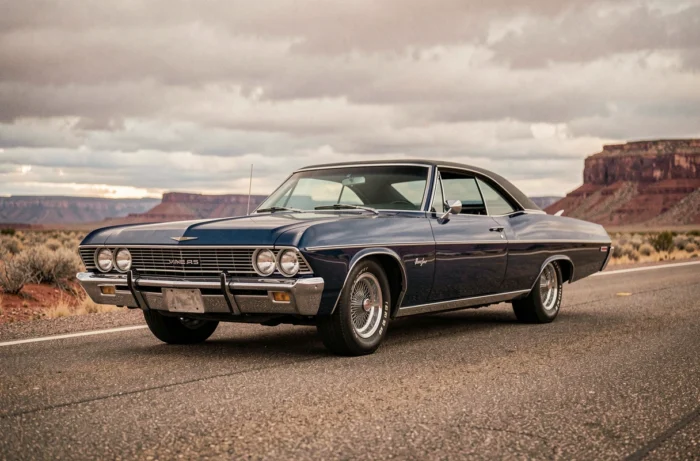
The Chevrolet Impala rolled off the production lines on February 27, 2020, when the last unit left the Detroit-Hamtramck factory. Since that date, no sedan has taken its place in the Chevrolet lineup. The model, launched in the late 1950s, has gone through more than six decades of production with interruptions, stylistic changes, and commercial repositionings.
Its disappearance from the catalog has not erased the interest it generates, neither in the recent used car market nor in the classic car segment.
End of Impala Production: What the End of an American Sedan Reveals
Chevrolet did not stop the Impala due to a lack of quality or reliability. The sedan disappeared due to the market’s shift towards SUVs and crossovers. This phenomenon, which began in the mid-2010s, has affected nearly all large American sedans. Ford had already discontinued the Taurus, and other manufacturers followed suit.
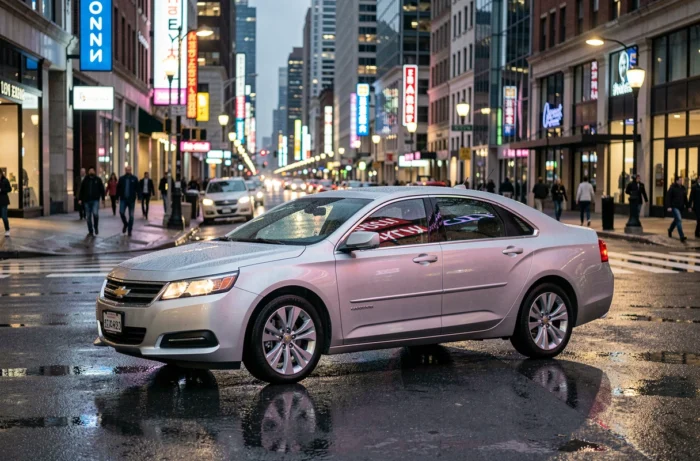
The 2014-2020 Impala, in its tenth generation, offered a spacious interior, a generous trunk, and a 3.6-liter V6 known for its smoothness. On the road, it provided a quiet driving comfort, sometimes compared to that of premium sedans sold at much higher prices. Its disappearance does not reflect a flaw in the product, but rather a profound reshaping of purchasing preferences in the United States.
For those following the model’s news and seeking car advice on Blog Automobile, the question of a potential return of the Impala regularly arises in forums and specialized publications. Chevrolet has not officially announced any plans for a revival.
Used Chevrolet Impala: A Depreciation That Attracts New Enthusiasts
The latest generation Impalas (2014-2020) experience significant depreciation in the used car market. This phenomenon, typical for large American sedans, creates a paradoxical situation: a comfortable and well-equipped car becomes accessible to a modest budget.
Where an equivalent SUV in age and mileage retains a high value, the Impala loses value quickly. For a buyer prioritizing interior space and driving comfort without seeking the ground clearance of a crossover, this is a concrete opportunity.
What Explains Owner Loyalty
Several factors maintain attachment to this model in the recent used car market:
- The 3.6-liter V6 engine offers sufficient power for highway trips, with low routine maintenance costs thanks to the wide availability of Chevrolet parts
- The rear passenger space rivals that of sedans in a higher segment, a selling point for families who refuse to compromise with an SUV
- The mechanical reliability of the latest generations is well documented by feedback from North American users, even beyond high mileages
This combination of price, comfort, and reliability explains why the recent Impala attracts buyer profiles who were not interested in the model when it was new.
Impala from the 1950s-1960s: The Classic Car Market
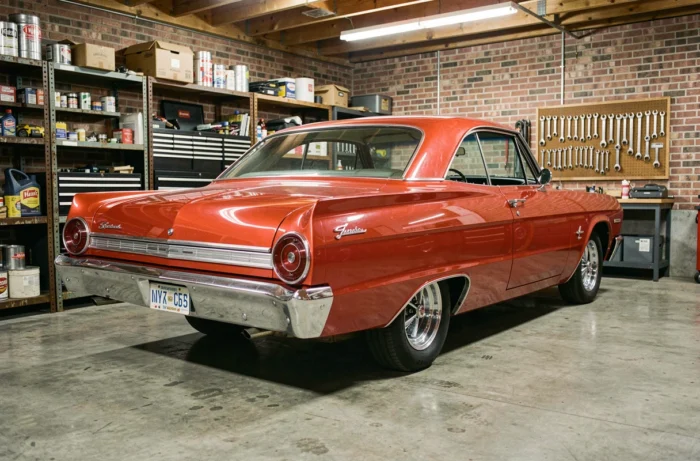
The Impala that truly captivates enthusiasts, the one that fuels gatherings, auctions, and popular imagery, remains the version produced between the late 1950s and the mid-1960s. The style of this era, with its tailfins, chrome, and exaggerated lines, embodies a specific moment in American automotive history.
Convertibles and Sport Sedan versions from this period concentrate the bulk of demand in the collector market. Original or factory-spec restored examples reach valuations unmatched by more recent models.
A Generational Transfer in Progress
The classic car market is undergoing a phase of transition. Historical collectors, often born in the 1940s-1950s, are gradually selling their vehicles. This generational transfer redistributes the available supply and changes selection criteria: younger buyers are more interested in mechanical authenticity and maintenance documentation than in mere aesthetics.
For a 1960s Impala, vehicle traceability (VIN, ownership history, restoration invoices) weighs heavily in valuation. Field feedback varies on this point, with some specialists estimating that cosmetic condition remains the dominant criterion for highly sought-after models, while others observe a rising demand for original mechanical conformity.
Why the Impala Remains an Automotive Symbol Beyond the Market
The Chevrolet Impala transcends the strict confines of the automobile. Its name has appeared in music, film, and American popular culture since the 1960s. This cultural presence maintains a notoriety that does not solely depend on production or sales.
In the California lowrider scene, the 1964 Impala holds an almost liturgical place. Hydraulic modifications, custom paint jobs, and revamped interiors transform the vehicle into an object of artistic expression. This subculture has exported the image of the Impala far beyond American borders, particularly to Europe and Japan.
For European enthusiasts, accessing an Impala remains more complex. Importing from the United States involves customs constraints, shipping costs, and homologation that varies by country. Available examples on European soil are rare, which enhances the model’s appeal through scarcity.
A Model Without a Direct Successor
Chevrolet has not replaced the Impala with any equivalent sedan. The manufacturer’s current lineup focuses on SUVs (Equinox, Traverse, Tahoe) and pickups (Silverado). The absence of a successor leaves a void that neither the market nor the manufacturer seems willing to fill.
This void fuels part of the fascination. The Impala represents an automotive format, the large American sedan with rear-wheel or front-wheel drive, that has no new equivalent at Chevrolet. For enthusiasts, owning an Impala means maintaining a connection to a category of cars that is disappearing from the catalogs of mainstream manufacturers.
The question of a return remains open. Rumors circulate regularly, fueled by patent filings or ambiguous statements from executives. The available data does not allow for conclusions about a potential revival project. The Impala continues to inspire dreams precisely because it now belongs to an automotive past that nothing can replace.