The choice of a spare part directly affects the longevity of a mechanical component, far beyond mere identical replacement. Between original manufacturer parts, first-fit supplier parts, and adaptable ranges, differences in metallurgy, tolerances, and surface treatment result in measurable differences in lifespan and performance in service.
Manufacturing Tolerances and Grades of Automotive Spare Parts
An “original” (OE) part comes off the same production line as the one installed at the factory. The “original equipment supplier” (OES) part comes from the same supplier but is marketed under its own brand, often at a lower price. The adaptable part reproduces the geometry without guaranteeing the same material specifications.
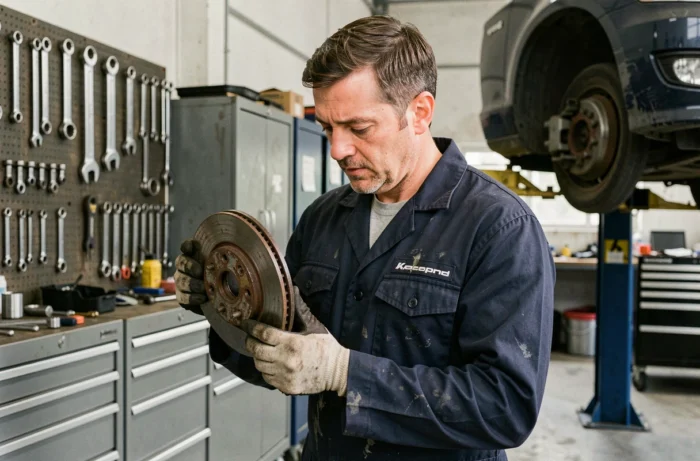
On a brake disc, for example, the grade of cast iron and the anti-corrosion treatment vary from one grade to another. A lower-grade lamellar graphite cast iron cracks faster under thermal stress. We recommend systematically checking the standard or specifications displayed by the manufacturer before any purchase.
Bearings illustrate this problem well. An adaptable bearing may have a radial play slightly exceeding the manufacturer’s specifications, which accelerates hub wear and generates characteristic noise after a few tens of thousands of kilometers. Catalogs list several qualities for the same application, and it is this technical detail that makes the difference between controlled maintenance and premature repair.
To consult technical references and compare the ranges available on the French market, a useful resource is: https://www.systeme-auto.com/, which brings together a large catalog of auto parts classified by vehicle and function.
Engine Oil and Filtration: Often Overlooked Technical Parameters
The choice of engine oil is not limited to SAE viscosity. The manufacturer standard (type VW 504.00, MB 229.52, or PSA B71 2312) defines the additive package, the level of sulfated ash, and compatibility with the particulate filter. Using oil that does not comply with the manufacturer standard degrades the DPF within a few oil changes.
We regularly observe premature clogging of EGR valves related to oil that is too rich in ash. The oil filter plays a complementary role: its filtration capacity, expressed in microns, and its anti-drainback valve determine the quality of lubrication at cold start.
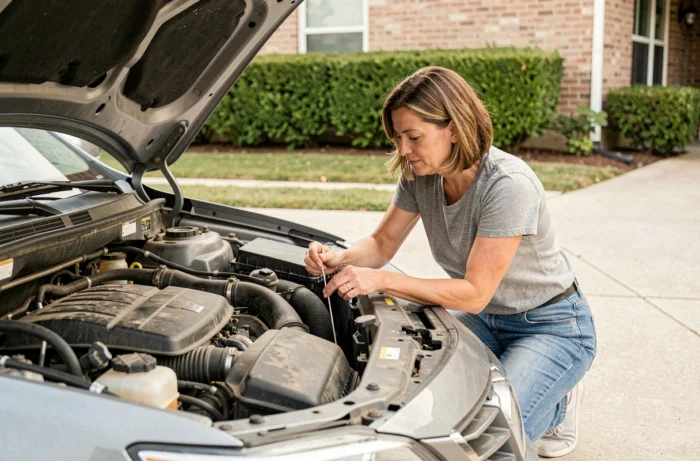
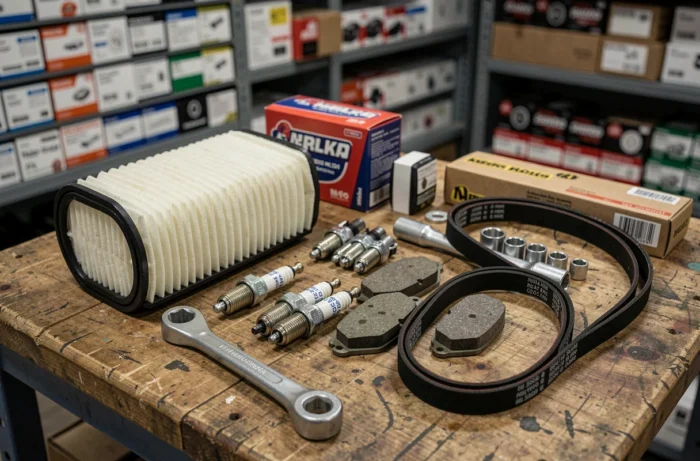
The air filter, often considered a secondary part, directly influences the mass flow rate of admitted air. A clogged filter enriches the air-fuel mixture and increases fuel consumption. On turbo gasoline engines, a low-quality air filter can allow abrasive particles to pass through, eroding the compressor blades.
- Oil filter: check the nominal flow rate, the filtering surface, and the presence of an anti-drainback valve. An undersized filter creates a pressure drop that reduces oil pressure at idle.
- Fuel filter: on high-pressure direct injection diesel engines, the filtration threshold must drop below five microns to protect the piezoelectric injectors.
- Cabin filter with activated carbon: beyond comfort, it protects the air conditioning evaporator from biological clogging, preserving airflow and limiting bacterial proliferation.
Brake Wear Parts: Recognizing When Replacement is Necessary
The minimum thickness of a brake disc is engraved on the disc itself (the mention “MIN TH” followed by a value in millimeters). Going below this threshold compromises thermal dissipation and significantly increases braking distances.
Brake pads deserve the same attention. Their composition (semi-metallic, ceramic, organic) determines the coefficient of friction when cold and hot. A ceramic pad offers better fade resistance but requires a higher operating temperature to achieve its optimal performance, making it less suitable for exclusively urban use.
Brake fluid, hygroscopic by nature, absorbs ambient moisture over time. A brake fluid saturated with water dangerously lowers its boiling point. The DOT 4 standard requires a dry boiling point above 230 °C, but after two years of use, this threshold drops significantly if the fluid is not renewed.
European Regulation 2026/1738 and Reusable Parts
The regulation (EU) 2026/1738 on end-of-life vehicles, which came into effect on August 13, 2026, redefines the conditions for reusing automotive parts. Manufacturers are now required to facilitate the non-destructive disassembly of key components (batteries, electric motors, radiators, control units) to allow for their refurbishment or reuse.
Starting in 2032, new vehicle types must incorporate at least 15% recycled plastic, a threshold that will rise to 25% in 2036. This obligation will mechanically transform the composition of common parts such as bumpers, interior trim, and air ducts.
Another significant new feature: every new vehicle put on the EU market from September 1, 2032, must be accompanied by a digital circularity passport. This document will contain disassembly data and the official catalog of spare parts, making the identification of compatible components much more reliable than it is today.
- Remanufacturing (industrial refurbishment) of parts such as turbochargers, alternators, or injectors becomes a fully-fledged supply chain, governed by traceability obligations.
- Reusable parts from controlled deconstruction will benefit from a harmonized warranty framework at the European level, which alleviates some of the historical mistrust of workshops.
- The data from the digital passport will allow independent repairers to access the same technical information as manufacturer networks, reducing the information asymmetry regarding the condition and compatibility of parts.
The maintenance of a vehicle relies on precise technical choices at each part replacement. The manufacturing grade, compliance with manufacturer standards, and traceability of components determine long-term reliability. With the implementation of regulation 2026/1738, the market for reusable and refurbished parts is becoming more structured, offering credible alternatives provided that specifications are checked before installation.