
In Belgium, renovating a home means navigating three distinct regulatory frameworks. Each Region sets its own rules for energy performance, grants and planning permission. In Wallonia, the renovation support scheme shifted on 1 October 2026 to subsidised loans targeting the least energy-efficient homes and works that improve the EPC rating.
In Flanders, buyers of properties rated E or F now have six years after the execution of the deed to achieve a D rating, compared with five years previously. In Brussels, no applications can currently be submitted for RENOLUTION grants for final invoices issued in 2025 and 2026, according to the information verified. With the situation changing, any budget planning is precarious unless it is based on the rules in force when the works contract is signed.
Renovating a condominium: when the owner does not decide alone
Most renovation guides assume that the project owner has full control over the entire project. That is not the case in a condominium.
In Flanders, an apartment rated E or F is subject to the same energy renovation requirement as a detached house. The owner of the unit must achieve a D rating within six years. However, roof or façade insulation concerns the common areas, so it requires a vote at the general meeting. The property manager may have other priorities, or the meeting may reject the budget.
In practice, an owner may find it technically impossible to meet their regulatory obligation without the cooperation of the other co-owners. The building’s documents (meeting minutes, multi-year works plan, reserve fund) should be reviewed before buying or budgeting for the renovation of a unit. An energy project in a condominium depends as much on the building’s governance as on the individual owner’s financial capacity.
For buyers, the preliminary sale agreement and the date of the deed trigger the legal deadline in Flanders. Buying into a condominium with no renovation plan for the common areas means accepting a scheduling risk that is difficult to manage alone. Specialist renovation resources, such as https://pp-renov-motiv.be, can help assess whether a project is feasible before you commit.

Renovation grants and loans in Belgium: what has actually changed
The landscape of financial support for renovation has changed unevenly across the Regions. Including a grant in your budget without checking that it is actually available when you receive the quote is the costliest mistake you can make.
Wallonia: from grants to subsidised loans
Since 1 October 2026, Wallonia no longer operates under the former renovation grant scheme. The scheme now relies on subsidised loans aimed at homes with the lowest energy performance. Eligibility depends on the EPC rating improvement targeted by the works. Having your financing plan confirmed before signing a quote is no longer just a precaution; it is an administrative necessity.
Brussels: a gap to fill
Verified sources indicate that no RENOLUTION grant applications can be submitted for final invoices issued in 2025 and 2026, and that no new support decision has been announced. An Ecoreno loan or a municipal grant may be an option, but building a renovation budget around an unconfirmed Brussels grant is risky.
Flanders: the extended deadline changes the strategy
Extending the deadline to achieve a D rating after purchase from five to six years, including for obligations already underway, provides extra leeway. This is not a gift: it allows you to spread out the work and better absorb increases in material costs, provided you plan a realistic schedule from the date of the deed.
Order of energy renovation works: insulate before heating
A common mistake is to replace the boiler first. Installing an efficient heating system in a poorly insulated building envelope means oversizing the equipment to compensate for heat loss. Six months later, once the insulation has finally been installed, the system is too powerful for the building’s actual needs.
The technical sequence that optimises the budget and EPC outcome follows a building-envelope-first approach:
- Start with the roof and attic, as these account for the greatest heat loss in most Belgian homes built before the 1980s
- Next, insulate the walls and façade, taking into account the method suited to the building (external or internal insulation, or cavity wall injection, depending on the configuration)
- Then address windows and ventilation, as replacing windows without suitable ventilation can cause damp and poor air quality
- Leave heating until last, sizing the system to the building’s actual demand once the envelope has been upgraded
In Wallonia, replacing an oil-fired boiler should be planned for well in advance as a key part of the overall project. If your system is ageing, comparing replacement options before it breaks down can help you avoid a rushed decision and an unsuitable system for your renovated home.
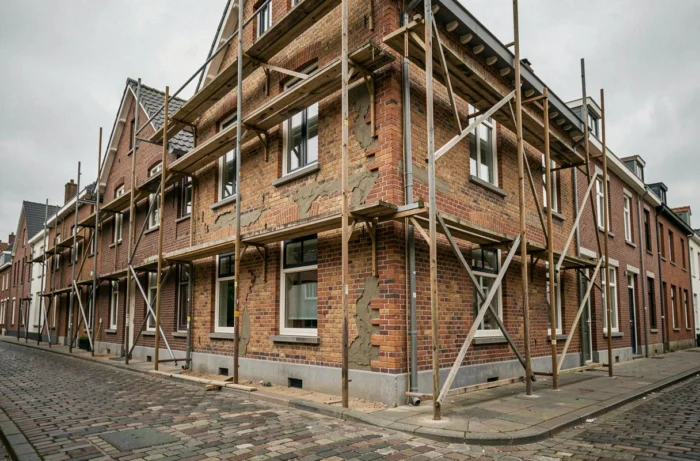
Planning permission and Belgian thresholds: what triggers the requirement
Not all renovation work requires planning permission. Thresholds vary by Region and by the type of work. As a general rule, work that changes the building’s exterior appearance, structure or use requires authorisation.
In Belgium, an architect is required as soon as work affects the building’s structural stability. Renovating a roof, removing a load-bearing wall or converting a garage into a habitable room requires planning permission and a registered architect. By contrast, replacing windows like for like or renovating a bathroom generally does not trigger this requirement.
The distinction between work requiring permission and work that is exempt is not always intuitive. External insulation changes the appearance of the façade and may require permission, whereas internal insulation does not. Checking with the municipal planning department before signing the quote is the only reliable way to be sure.
Belgium’s renovation regulations evolve so quickly that any guide can soon become outdated. Grants change, deadlines shift and requirements become stricter. The one constant is that a comprehensive building assessment and a check of the rules in force when the work begins offer better protection than a theoretical plan drawn up two years earlier.