How to distinguish a passing decorative trend from a movement that sustainably restructures French interiors? Between color palettes, material choices, and new consumption modes, the 2024 decor trends outline foundational lines that color catalogs alone cannot explain.
Circular economy and turnkey services: what drives the interior decoration market
Recent analyses of the French furniture and decoration market show that turnkey design services are among the fastest-growing segments. The demand is no longer for an isolated object, but for comprehensive support: advice, purchase, installation.
This shift has a direct impact on the trends visible in interiors. When a provider manages the entire project, stylistic coherence increases, and sustainable or refurbished materials are more easily integrated into the specifications. The measurable growth of offers based on reuse and circularity (second-hand, refurbished, repurposed) confirms this structuring orientation.
To track the concrete evolution of these decorative movements, specialized platforms like the Parlons Déco website regularly document the styles and materials that are settling into French homes.
Trending colors 2024: neutral palettes versus saturated accents
The two chromatic families dominating this year are not as opposed as they may seem. The table below summarizes their characteristics and most common uses.
| Chromatic family | Key shades | Preferred rooms | Desired effect |
|---|---|---|---|
| Warm neutrals | Ash beige, off-white, greige | Living room, bedroom | Calm, natural brightness |
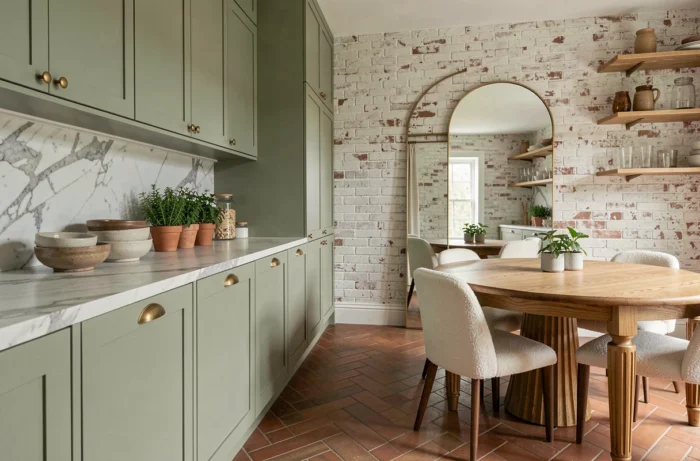
| Deep greens | Forest green, sage green | Office, dining room | Grounding, connection to nature |
| Terracotta and peach | Peach Fuzz (Pantone color 2024), rosy ochre | Entryway, open kitchen | Warmth, conviviality |
| Powdery blues | Faded sky blue, blue-gray | Bedroom, bathroom | Freshness, understated elegance |
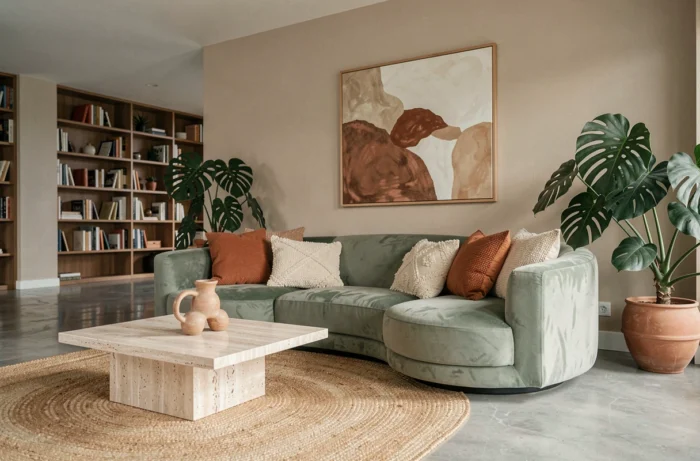
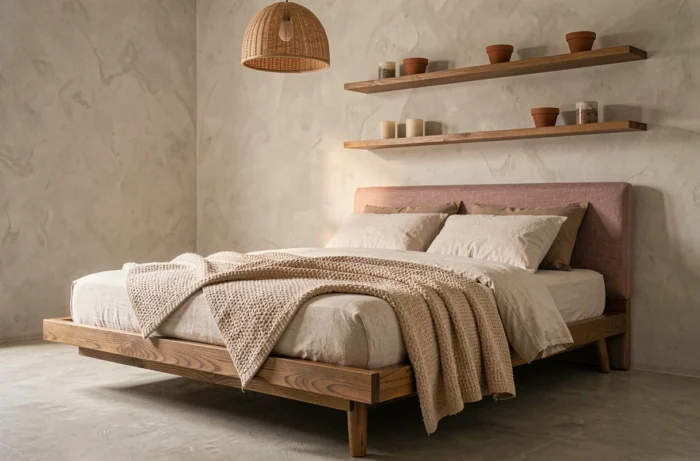
Warm neutral shades remain the foundation of most projects. In contrast, saturated accents like forest green or terracotta serve as identity markers in an otherwise sober room. A common mistake is to multiply accents: a single wall or a set of textiles is enough to anchor the palette.
The case of Peach Fuzz in French interiors
Designated color of the year by Pantone, this peach hue is found more in accessories (cushions, vases, lighting) than on walls. Its adoption in France primarily occurs through small touches, which limits the risk of quick fatigue.
Materials and decor styles 2024: wood, metal, and biophilia
The choice of materials reflects a balance between aesthetics and environmental responsibility. Three clear axes emerge.
- Light-colored wood and chevron patterns: light wood floors and wall coverings dominate renovation projects, often laid in a chevron pattern to add relief without resorting to color.
- Brushed metal and chrome: after several years of brass, chrome is returning as a finish for lighting and faucets, bringing a more contemporary touch than gold.
- Organic materials and curved shapes: furniture with rounded lines (armchairs, coffee tables, mirrors) extends the so-called biophilic trend, which aims to bring the interior closer to nature through shapes, textures, and plants.
Ribbed velvet and boucle fabric maintain their place in upholstery textiles. In contrast, very smooth and shiny finishes are declining in favor of textured, fluted, or laminated surfaces, including on furniture fronts.
Wabi-sabi and coastal: two decor philosophies that reinforce each other
The wabi-sabi style, inspired by Japanese aesthetics, values simplicity and embraced imperfections. This is concretely reflected in artisanal ceramics, lime-plastered walls, and minimalist furniture in muted tones.
The coastal style, of American origin, incorporates white, natural wood, and marine references. These two styles share a rejection of standardized furniture and a preference for unique pieces, often sourced from short supply chains or second-hand.
Interior renovation and regulatory constraints in 2024
Transforming one’s interior goes beyond just choosing a color palette. The Climate and Resilience Law of August 22, 2021 imposes a progressive timeline for banning rentals of the most energy-intensive homes. Any decoration project in a rental property must now incorporate this data.
A homeowner completely renovating a living room or bedroom has every interest in coupling aesthetic renovation with energy performance improvement (wall insulation, replacement of windows). Combining decorative work and energy renovation optimizes the overall budget by pooling interventions.
Assistance programs like energy savings certificates are evolving towards a focus on large-scale renovations, favoring comprehensive projects over one-off touch-ups. Interior design and thermal performance converge: interior insulation modifies wall thickness, thus altering the perceived volume of a room, and requires rethinking furniture layout.
The 2024 decor trends outline an interior where coherence takes precedence over accumulation: a limited palette, sustainable materials, organic shapes, and an increasing consideration of regulatory frameworks. The lasting decorative project is one that integrates these constraints from the outset, not one that discovers them at the time of work.