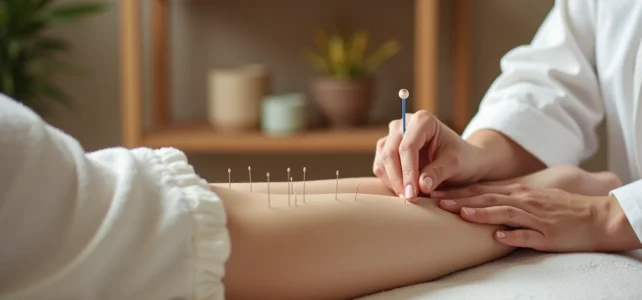
Acupuncture is one of the most studied practices among unconventional medicines. However, the evidence of its effectiveness remains the subject of scientific debate, and the line between specific effect and placebo effect is not always clear. This article measures what current research truly allows us to affirm about acupuncture, its applications, and its limitations.
Acupuncture and placebo effect: what research distinguishes
A synthesis of scientific popularization reminds us that the specific effectiveness of acupuncture beyond placebo is not considered simply demonstrated. The effects observed during sessions may partly stem from the care ritual (welcome, listening, calm environment, needle placement) rather than from action on specific points or meridians.
This finding does not mean that acupuncture is without effect. It means that separating the technical gesture from the therapeutic context remains a methodological challenge for clinical trials. So-called “blind” studies are difficult to conduct: a patient generally feels whether a needle is inserted or not.
The Organization of Acupuncture Professionals offers resources to better understand the framework of this practice, notably at https://www.apca-az.org/, which details the training and professional standards in force.

Acupuncture in oncology: documented supportive uses
One of the areas where acupuncture is gaining clinical credibility is in supportive care in oncology. Several hospital centers integrate it to support patients during or after intensive treatments.
The most frequently cited indications in this context include:
- Reduction of nausea and vomiting related to chemotherapy, one of the best-documented uses in the literature
- Management of post-treatment fatigue, a symptom for which medication options remain limited
- Relief of dry mouth (xerostomia) and certain sensory disorders after cancer
- Complementary pain management, in conjunction with conventional analgesics
This approach does not replace conventional medicine. It adds to it, under medical supervision, in a logic of integrative medicine rather than substitution.
Needle-free acupuncture: photobiomodulation and auriculotherapy
The fear of needles remains a barrier for some of the public. A recent trend addresses this reluctance: the development of non-invasive forms of acupuncture.
Some practitioners use photobiomodulation (stimulation by low-intensity light), reflex points, or auriculotherapy with microbeads adhered to the skin of the ear. These techniques aim to reproduce some of the desired effects without skin penetration.
The table below compares the characteristics of the main approaches:
| Approach | Needles | Main characteristic | Target audience |
|---|---|---|---|
| Traditional acupuncture | Yes (superficial insertion) | Stimulation of points on the meridians | Adults, pregnant women, elderly people |
| Adhered auriculotherapy | No | Microbeads on ear points | People reluctant to needles |
| Photobiomodulation | No | Stimulation by low-intensity light | Sensitive patients or those in supportive care |
Data on the comparative effectiveness of these variants are still limited. Traditional acupuncture remains the most studied form, and the majority of published clinical results concern needle placement.
Integrative medicine or alternative medicine: a safety issue
The debate over the status of acupuncture opposes two visions. On one side, an integrative approach that combines acupuncture and conventional medicine under medical coordination. On the other, a use as alternative medicine, sometimes without parallel medical follow-up.
The main risk of isolated practice is diagnostic delay. A patient who consults an acupuncturist for persistent pain without prior medical assessment may miss a pathology requiring prompt treatment.
In France, acupuncture can be practiced by doctors holding an interuniversity diploma (DIU) in acupuncture. Some non-medical practitioners also practice, but the regulatory framework of their activity is under discussion. Coordination between acupuncturist and treating physician remains the key safety factor for the patient.
Acupuncture and chronic pain: musculoskeletal applications
Among the most common reasons for consultation, musculoskeletal pain occupies a central place. Chronic low back pain, tension headaches, migraines, and joint pain are among the indications for which acupuncture is most often recommended by practitioners.
The acupuncturist uses several therapeutic tools beyond needles:
- Cupping, applied to areas of muscle tension to promote local circulation
- Moxibustion (heat applied to acupuncture points), used for certain joint pains
- Electroacupuncture, which adds light electrical stimulation to the needles
On the other hand, results vary according to the type of pain and the duration of symptoms. Long-standing chronic pain often responds less well than recent pain, and several sessions are generally needed before observing an effect.
Acupuncture does not cure a structural lesion (herniated disc, advanced osteoarthritis). It acts on the perception of pain and associated muscle tension, which explains why its integration into a multidisciplinary care pathway yields better results than isolated use.
The choice of a qualified practitioner, transparency about the limits of the method, and coordination with the treating physician remain the three conditions for deriving real benefit from acupuncture. Scientific data is progressing, but they invite a cautious reading of overly categorical promises.