
The bikini area remains one of the most delicate areas to wax for men. Thin skin, often thick hair, risk of irritation: each method of male bikini hair removal has its advantages and limitations. Before choosing between wax, laser, or trimmer, it is essential to understand how this area reacts and what makes the difference between a clean result and a week of discomfort.
Sensitivity of the male intimate skin: what changes the game
Have you ever noticed that regrowth after shaving the bikini area often causes more itching than on the legs or chest? The skin in the intimate area is thinner, more vascularized, and constantly subjected to friction from clothing. Pubic hair, on the other hand, is naturally thicker and curlier, which promotes ingrown hairs.
This combination explains why the choice of hair removal method is as important as the technique. A poorly used razor on this area creates micro-cuts invisible to the naked eye, but enough to cause redness and irritation for several days.
To better understand how male bikini hair removal works on Univers Beauté, it is useful to look at the structure of the hair itself: a bulb deeply anchored in the dermis, surrounded by nerve endings, which explains the pain felt during waxing.
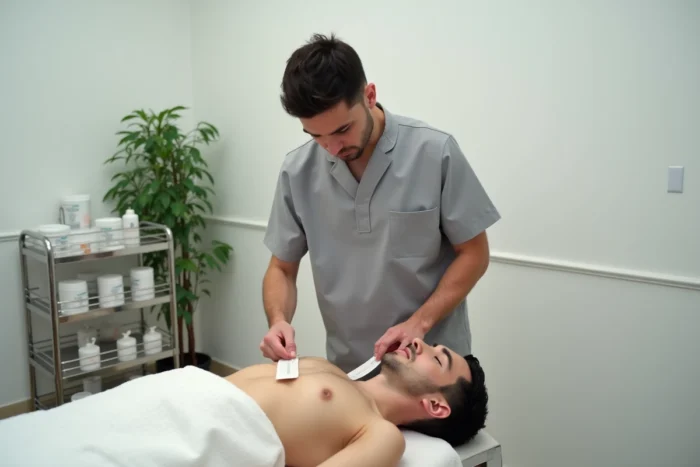
Hot wax on the male bikini area: the method that pulls hair from the root
Hot wax is the most commonly used technique in salons for male intimate hair removal. The heat opens the pores, making it easier to extract the hair from the root. The result: slower regrowth and finer hair over the sessions.
In practice, the beautician applies the wax in the direction of hair growth and then pulls it off quickly in the opposite direction. For the bikini area, this technique requires working in small strips to limit pain.
Hot wax or cold wax for the bikini area
Cold wax (ready-to-use strips) seems easier to use at home. It does not grip thick and short hairs in the pubic area as well. Professionals advise against it for male bikini hair removal, as it often removes hair incompletely, increasing the risk of ingrown hairs.
Hot wax remains the best compromise between effectiveness and duration of results for this area. Expect visible regrowth in about three to four weeks, depending on your hair density.
Laser hair removal for the male bikini area: what salons don’t always detail
Laser hair removal has seen a marked increase in male clientele since 2023-2024, especially for the bikini area. Daily comfort, hygiene, and time-saving are among the most cited motivations by men who take the plunge.
The laser targets the melanin in the hair to destroy the bulb. The darker the hair and the lighter the skin, the more effective the treatment. In the intimate area, this works well because pubic hairs are generally very pigmented.
Post-session instructions often overlooked
After a laser session on the bikini area, several centers remind clients of precautions rarely detailed in mainstream guides:
- Do not shave the area after the session: the hairs should fall out on their own within one to two weeks.
- Avoid any sun exposure on the treated area to limit the risk of hyperpigmentation.
- Regularly moisturize the skin in the following days to prevent superficial burns and tightness.
French regulations have also clarified for minors: a 16-year-old can access laser hair removal (including intimate areas), but only with written parental consent, the presence of a parent at the first appointment, and a prior dermatological consultation at a certified medical center.

Trimmer and shaving for the bikini area: quick solution, real limits
The electric trimmer is often the first reflex. It shortens the hair without pulling it out, making it almost painless. For regular maintenance of the intimate area, it is a practical option, provided you accept quick regrowth (a few days).
The classic razor, on the other hand, cuts the hair flush with the skin. On the male bikini area, it poses a recurring problem: regrowth creates a “prickly” effect and promotes irritation. Pubic hairs, naturally curly, tend to grow back under the skin after shaving, generating sometimes painful ingrown hairs.
When to prefer the trimmer over the razor
The trimmer is better suited if you are looking for a “clean but not smooth” finish. It reduces hair without causing the skin-to-skin friction that leads to post-shave irritation. For men who are new to bikini hair removal, starting with the trimmer allows you to get used to the result before considering more durable methods like wax or laser.
Depilatory cream on the intimate area: specific precautions
Depilatory cream dissolves the keratin in the hair using chemical agents. On the bikini area, this method requires particular vigilance: the intimate skin reacts more quickly to active ingredients than the skin on the legs or chest.
- Always test the product on a small area (inside of the wrist or top of the thigh) at least 24 hours beforehand.
- Never exceed the recommended application time, even if the result seems incomplete.
- Choose a cream specifically formulated for sensitive or intimate areas.
- Rinse thoroughly with lukewarm water and apply an alcohol-free soothing treatment.
The result lasts a bit longer than shaving (about a week), but depilatory cream is not suitable for all skin types. Reactive or eczema-prone skin should avoid this method on the bikini area.
No technique is universally better than another for male bikini hair removal. The choice depends on your pain tolerance, the frequency of maintenance you accept, and your skin’s reaction. Wax offers the best duration, laser aims for the long term, and the trimmer remains the most accessible. Testing a method on a small area before extending it remains the most reliable reflex to avoid unpleasant surprises.