
We receive the AAH, live in our own accommodation, receive housing assistance, and yet the payment of the majoration for autonomous living (MVA) does not appear in the account. The problem almost always arises from a misunderstood eligibility criterion or an administrative situation poorly identified by the CAF or MSA.
MVA and ASI beneficiaries: a specific process often overlooked
For individuals receiving the AAH, the MVA is automatically paid as soon as the criteria are met. For those receiving the additional disability allowance (ASI), the application must go through the MDPH. Without this application submission, no payment is triggered.
In practical terms, if one receives a disability pension supplemented by the ASI and meets the other criteria, a file must be submitted to the departmental house for disabled persons. It is the CDAPH that decides, and the processing time varies from one department to another.
This point changes the game for anyone who has transitioned from a disability regime to a system related to disability. In practice, many potential ASI beneficiaries miss out on the MVA because they have not identified this step. An article detailing the conditions to obtain the majoration for autonomous living allows for a quick check to see if automatic payment applies to their situation.
Five cumulative criteria for the MVA: what blocks in practice
On paper, the conditions are known. All must be met simultaneously:
- Justify a permanent disability rate of at least 80%, recognized by the CDAPH.
- Receive the AAH at full rate or as a supplement to a retirement pension, disability pension, or work accident annuity (or receive the ASI under the same conditions).
- Receive no income from professional activity.
- Occupy independent housing (not a group home, not living with a third party in an administrative sense).
- Receive housing assistance: APL, social housing allowance (ALS), or family housing allowance (ALF).
The criterion that poses the most difficulties in practice is independent housing coupled with housing assistance. A person living rent-free with a relative, even in a separate apartment within the same property, may be denied the MVA if housing assistance is not granted.
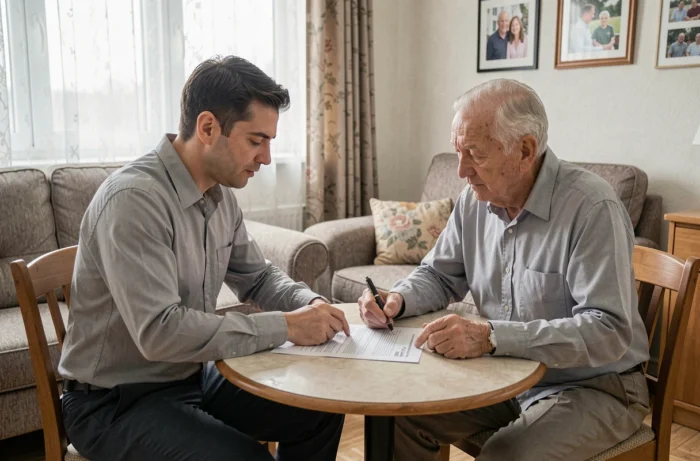
Another frequent blockage: any income from activity, even minimal. The slightest salary, even for very part-time work, eliminates the right to the MVA. Feedback varies on this point when it comes to occasional income (temporary work, activity in ESAT), but the official rule is strict.
Flat-rate amount and absence of a specific resource ceiling
The MVA is a flat-rate allowance paid monthly. This amount is the same for all beneficiaries, regardless of household composition, degree of disability beyond the 80% threshold, or the amount of rent.
A point rarely highlighted: the MVA has no specific resource scale. Access depends exclusively on meeting the five criteria listed above. If these conditions are met, the full flat-rate amount is received, without any deductions or adjustments.
This allowance is non-taxable and does not appear on the income declaration. It can be combined with the AAH and the disability compensation benefit (PCH), making it a direct supplement to finance housing adaptations or ongoing expenses related to staying at home.
Interruption of the MVA: hospitalization, accommodation, incarceration
Payments do not stop overnight in the event of hospitalization or accommodation in a medical-social establishment. The MVA continues to be paid for 60 full days from the date of admission.
After this period, the payment is suspended. It resumes as soon as the individual returns to independent housing, without the need to submit a new application, provided that the other criteria remain met. The same rule applies in the case of incarceration.
In practice, it is the CAF or MSA that manages this suspension. No action is required to report hospitalization if the establishment transmits the information, but it is advisable to check with the paying organization that the payment has resumed after discharge.
Special case: temporary accommodation in a group home
A stay in day care or temporary accommodation does not necessarily lead to immediate suspension. It all depends on the duration and administrative status of the stay. If the independent housing remains occupied and housing assistance continues to be paid, the MVA is maintained during the 60-day period.
MVA and former resource supplement: what remains in effect
The resource supplement (CPR) has been abolished for new applicants since December 2019. Individuals who were receiving it before this date retain their rights for ten years but cannot combine CPR and MVA.
For everyone else, the MVA is now the only housing-related supplement available to AAH beneficiaries. If one was receiving the CPR and loses this right at the deadline, they automatically transition to the MVA if the conditions are met.
Confusion between these two systems persists in many letters from the CAF. In case of doubt, the most reliable method is to check directly on one’s personal CAF or MSA space for the active benefit line and compare it with the expected flat-rate amount for the MVA.

The MVA remains a concrete lever for the home care of individuals with disabilities. Over twelve months, the accumulation of these monthly payments helps to cover part of the costs related to housing adaptation or ongoing maintenance.