A Motorola StarTAC in its original packaging is not valued the same as an unlocked StarTAC with a loose hinge. Before rummaging through a drawer or bidding on an auction, it’s essential to understand what separates a vintage flip phone with high market value from a device that will never find a buyer beyond a few euros.
Grading and condition: the criteria that determine the price of a flip phone
In the secondary market for retro phones, we see that the concept of condition increasingly borrows from numismatic grading standards. A device rated “mint” (sealed box, original accessories in plastic) can be worth ten times more than the same model in “used” condition. The presence of the complete original packaging – box, charger, manual, headphones – remains the primary lever for valuation.
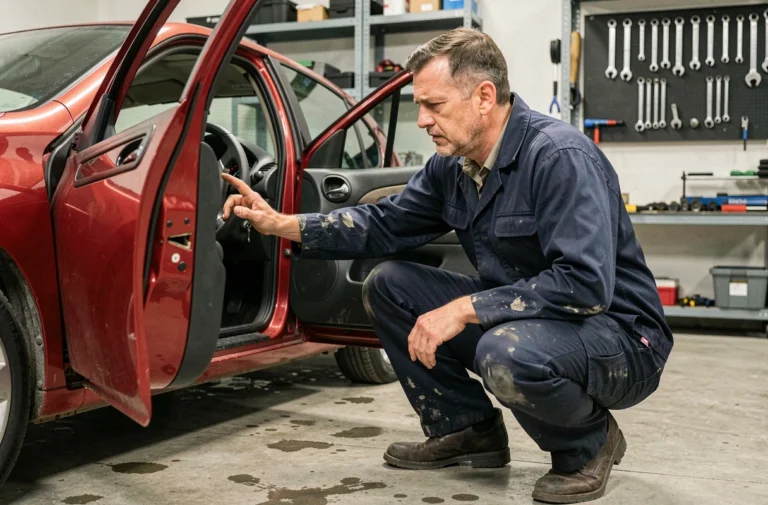
The hinge is the structural weak point of any flip phone. A mechanism that no longer snaps firmly, an oxidized axle, or a damaged internal flex immediately lowers the value. Collectors also check the condition of the paint (micro-scratches, loss of varnish on the edges) and the functioning of the external screen, often a small monochrome OLED or LCD prone to dead lines after two decades of storage.
Among the old flip phones to keep, those that combine sealed box and original battery never activated fetch the highest bids. A swollen or missing battery, however, does not disqualify the device but requires sourcing a compatible replacement, which becomes increasingly difficult each year.

High-value vintage flip phone models: Motorola, Nokia, and the outsiders
The Motorola StarTAC remains the absolute reference of the market. The first true mass-market flip phone, it enjoys an iconic status comparable to that of the Nokia 3310 among bar phones. The AMPS analog versions are rarer than the GSM models, and therefore more sought after by American collectors, while the European market favors the dual-band variants.
The Motorola RAZR V3 (2004) occupies the second spot. Its anodized aluminum shell and record thickness for the time make it a design object as much as a phone. Limited editions (Dolce & Gabbana, V3i Gold) trade significantly above the standard model.
Nokia: the 8110 and 8800 at the forefront
The Nokia 8110, popularized by the Matrix movie, combines slider-flip format and rarity. Its motorized sliding mechanism often breaks down, making perfectly functional examples scarce. The Nokia 8800, with its stainless steel casing and OLED screen, attracts a clientele looking for a discreet luxury item rather than a museum piece.
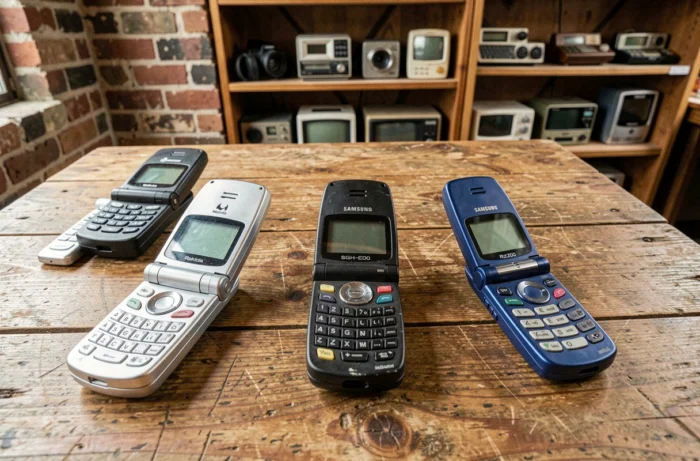
On the outsider side, the Samsung SGH-E700 (the first Samsung flip phone with an internal color screen) and the Sony Ericsson W300i find their audience among collectors from the 2000-2005 generation. The Japanese market adds a layer of complexity: the “keitai” flip phones from Sharp, Panasonic, and NEC, locked to DoCoMo networks, are actively traded on Yahoo Auctions Japan but remain nearly impossible to find in Europe.
Why the value of true flip phones increases as foldable smartphones decline
Shipments of flip-format foldable smartphones have dropped by nearly half in the first half of 2026 compared to 2025, according to Omdia data. This disaffection for the modern “fake flip” creates an interesting tipping effect in the vintage market.
Collectors and nostalgia enthusiasts draw a clear line between a Galaxy Z Flip, produced in millions with a flexible screen, and a Motorola StarTAC whose global stock is only decreasing. Each device thrown away, recycled, or destroyed by a failing battery removes a unit from a finite pool. Unlike current smartphones, no flip phone from the 1990s-2000s will ever be remade.
European regulations on electronic waste (WEEE directive) further encourage the recycling of dormant devices. The European Union now requires manufacturers to provide spare parts for seven to ten years, but this obligation obviously does not cover models produced before its implementation. The result: spare parts for vintage flip phones are disappearing from the official circuit, which strengthens the premium for complete and functional examples.
Reselling a flip phone: platforms, pitfalls, and realistic estimation
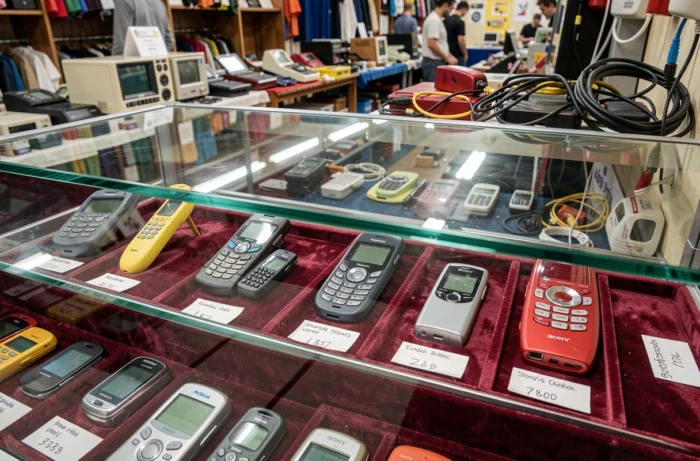
eBay remains the primary price barometer for vintage mobiles. We recommend filtering by “completed sales” to obtain actual prices, not asking prices. The discrepancies between the two can be considerable: a seller may list a Motorola RAZR for several thousand euros without ever finding a buyer.
Points to watch before selling:
- Test the power on with a compatible charger (the proprietary connectors from the 2000s are often hard to find; a universal pin adapter can serve as a temporary solution)
- Photograph each side, the hinge open and closed, the screen on, and the complete contents of the box if applicable
- Mention the country of origin and frequency band (a North American CDMA device has no network utility in Europe)
- Check if the IMEI is blacklisted, even if the device will never be used as a phone, some buyers require a clean IMEI
The Japanese market via Yahoo Auctions Japan sometimes offers lots of retro flip phones (Sharp, Panasonic, NEC) at prices much lower than the European market, but proxy purchase and shipping fees reduce the margin. Physical auctions specializing in technological objects, still rare in France, are growing in the UK and Germany.
Should you keep or sell now?
The underlying trend favors keeping iconic models in mint condition. The pool is decreasing each year, demand remains stable, and no signals suggest a turnaround. For mid-range models in average condition, the resale window is now: their value is stagnating, and the cost of restoration (battery, hinge) often exceeds the expected gain.
A well-preserved vintage flip phone doesn’t need marketing. Its history, mechanical rarity, and the impossibility of reproducing it do the work. The sorting to be done is simple: keep what is rare and complete, sell what is common before interest wanes.