
Behind every carefully framed interior photo, there are constraints that the image does not show: maintaining a light-colored floor with children, noise bouncing around in an open room, the decorative furniture blocking circulation. Decor trends come and go, but the daily irritants remain.
This article starts from a simple observation: most content on interior design talks about aesthetics without addressing the actual use of the rooms. Acoustics, ease of cleaning, and the versatility of spaces are, however, the primary criteria that determine whether an interior works on a daily basis.
Acoustics and daily comfort: the neglected aspect of interior decor
Open spaces, very popular for about a decade, pose a problem rarely mentioned in magazines: sound travels unimpeded from one area to another. A conversation in the kitchen drowns out the television in the living room. The sound of dishes interrupts a work-from-home call.
Several levers can help reduce reverberation without creating partitions. Thick textiles (heavy curtains, long-pile rugs) absorb some sound waves. Shelves filled with books, placed between two areas, create a partial acoustic barrier while also serving as storage.
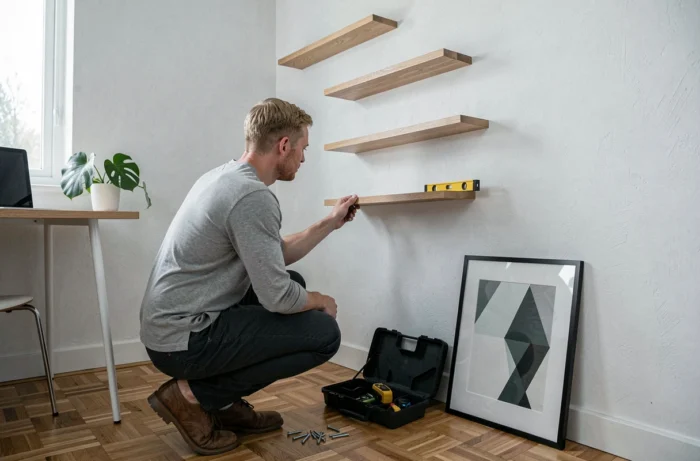
Wall panels made of felt or wood fibers, mounted on the wall like paintings, offer more targeted absorption. Their effectiveness depends on their thickness and positioning, particularly in relation to reflective surfaces like glass or tiles. Feedback from the field varies on this point: in a room with many windows, a single panel doesn’t make much difference.
The goal is not to turn a living room into a recording studio, but to make it bearable to coexist with multiple activities in the same space. Anyone looking for home advice on Blog VIP will find this type of concrete concern, far from purely visual staging.
Multifunctional furniture and integrated storage: beyond the decor trick
The trend of convertible furniture addresses a very real constraint: the average living space is decreasing in urban areas. Wall-mounted drop-leaf tables, storage benches, Murphy beds—these solutions have existed for a long time, but their adoption is accelerating with the rise of remote work from home.
A common pitfall is buying a “space-saving” piece of furniture without checking its sturdiness or practicality in use. A drop-leaf desk that wobbles as soon as you place a computer on it ends up being unused. A sofa bed whose mechanism requires two people to unfold remains in sofa position.
Before investing, three criteria should be checked:
- The transformation mechanism must be operable with one hand, without excessive effort, even after several months of use
- The supporting structure must bear the actual weight of use (a desk surface supports a monitor, a keyboard, books, not just a vase)
- The integrated storage must remain accessible without moving other furniture; otherwise, it becomes a dead space in a few weeks
A poorly chosen multifunctional piece of furniture clutters more than it frees up. It’s better to have a well-sized simple piece than an ingenious but fragile object.
Colors and materials: how maintenance affects decor choices
Matte white on the walls, polished concrete on the floor, velvet on a sofa: these aesthetic choices are appealing in photos. In practice, each presents maintenance constraints that decor inspirations rarely mention.
Matte white marks with the slightest friction and does not clean as easily as a satin finish. In a hallway or a living room with children, repainting becomes a regular chore. A velvet paint finish (slightly satin) offers a matte-like appearance with significantly better cleaning resistance.
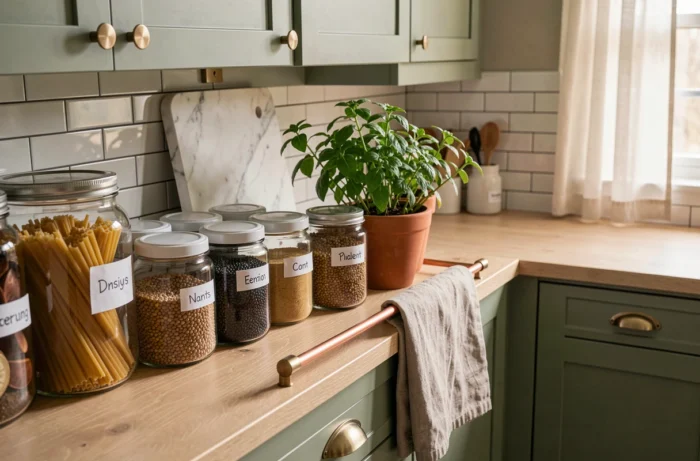
Polished concrete, very present in contemporary interiors, requires periodic waterproofing treatment. Without this maintenance, grease stains in the kitchen or water marks in a bathroom become irreversibly ingrained. Large-format tiles with a concrete effect replicate the aesthetic with near-zero maintenance.
For upholstery textiles, the determining criterion remains the Martindale index, which measures abrasion resistance. A fabric intended for a family sofa should have a high index. The useful threshold varies according to the weave structure and fiber type, making each textile reference comparable only at equivalent thickness and weave.
Rethinking circulation in each room before decorating
An interior that “works” is primarily one where you can move around without navigating obstacles. Decoration comes afterward. Placing a decorative armchair in a passageway, adding a console in a narrow entryway, or overloading a kitchen countertop with decorative items reduces the functionality of the room.
The basic rule used by interior architects is based on passage zones: every frequent route (entry to kitchen, bedroom to bathroom) must remain clear with sufficient width to pass without turning sideways. Any piece of furniture placed on a daily circulation axis ends up being moved or circumvented.
Before choosing a new piece of furniture or decorative object, a simple method is to observe your own movements in the room for a few days. The areas where you pass most often should remain free. Dead zones (unused corners, nooks) are where supplementary furniture or storage naturally finds its place.
- Marking the floor with tape to outline the footprint of a contemplated piece of furniture before purchasing allows you to check that it does not obstruct any passage
- Furniture on wheels (carts, side tables) offers real flexibility in rooms that change use throughout the day
- A mirror placed facing a source of natural light visually enlarges the space without altering physical circulation
The most sustainable interior design starts from usage, not from appearance. Decor trends offer aesthetic directions, but only daily life validates the choices. An easy-to-clean floor, controlled acoustics, and furniture that serves every day matter more than the chosen style.