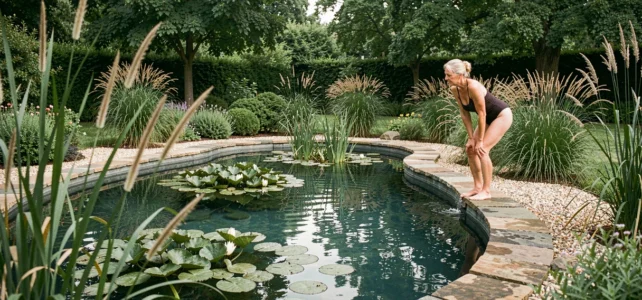
When considering a natural pool, the first instinct is to compare its price to that of a traditional chlorine pool. The purchase price only tells part of the story. To estimate a realistic budget, one must include the plant filtration area, maintenance over several years, and how the pool ages, as a natural pool does not depreciate like a chemical installation.
True cost of a natural pool over 10 years: filtration, maintenance, and resale
Why think in terms of 10 years rather than just the construction price? Because a traditional chlorine pool generates recurring expenses that are often underestimated: chemicals, replacement of the filtration system, electricity consumption of the pump. A natural pool eliminates the “treatment products” line from the annual budget.
The seasonal maintenance of an ecological pool focuses on trimming aquatic plants, cleaning the bottom, and checking water circulation. These tasks require time rather than money. Annual maintenance costs are significantly lower than those of a chlorinated pool.
On the resale side, a garden with an integrated aquatic ecosystem attracts environmentally conscious buyers. Real estate agents note that this type of landscaping enhances a property, whereas an aging traditional pool can become a drawback. Over a decade, the initial extra cost of a natural pool tends to amortize due to the absence of chemical consumables and the durability of materials.
To better understand the price of a natural pool based on your land configuration, several technical parameters come into play, starting with the famous regeneration area.
Regeneration area: the budget item that changes everything
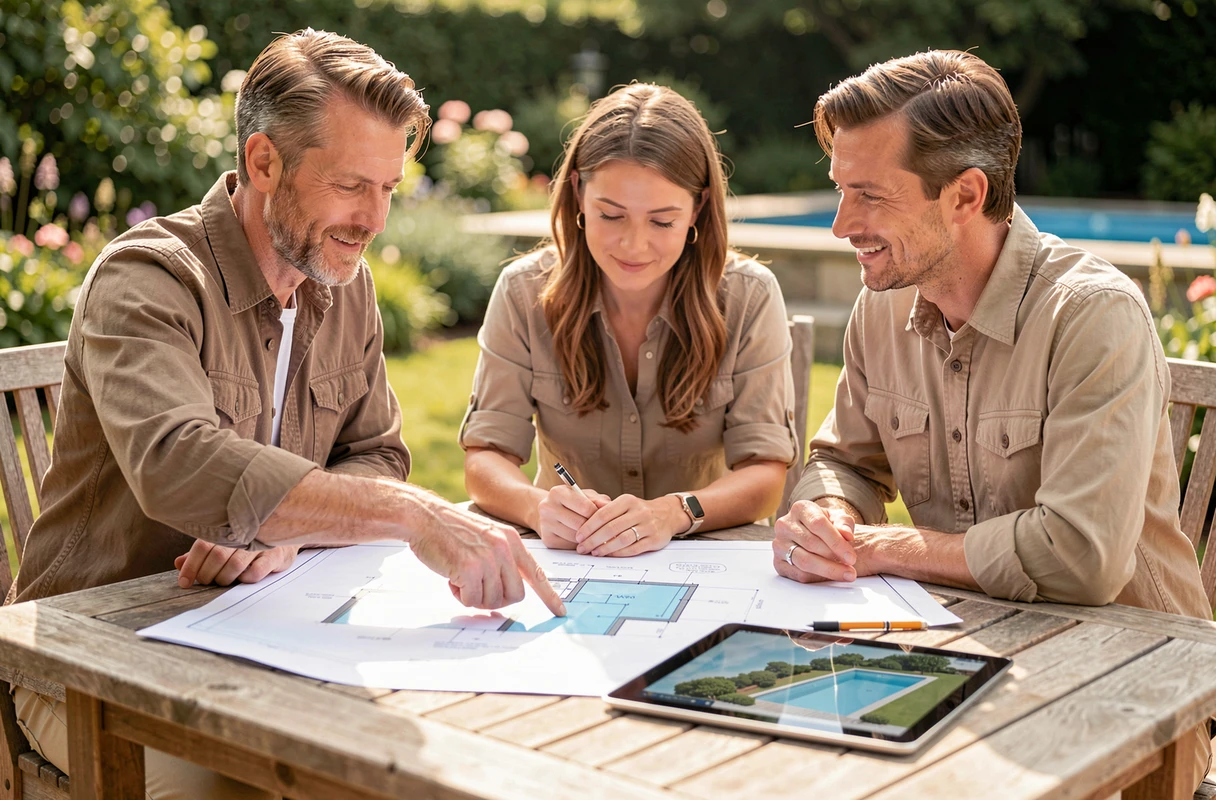
You may have already seen diagrams showing a swimming pool flanked by a planted area. This regeneration area (or lagooning area) is the heart of the system. It filters the water through plants and microorganisms, without any chemicals.
Its sizing significantly impacts the budget. The regeneration area often represents 30 to 50% of the total surface of the project. The larger this area is compared to the swimming area, the more efficient the filtration, but the more expensive the earthworks and plantings become.
Let’s take a concrete example. For a swimming area of 30 m², the plant area can reach an additional 15 to 20 m². That’s just as many square meters to excavate, waterproof, and plant. Reducing this area to save money risks murky water from the first summer.
Balancing swimming area and filtration area
The choice depends on usage. A family wanting to swim needs a pool of at least 30 m² with more than one meter of depth. With the regeneration area, the total surface easily exceeds 50 m². For cooling purposes, a 15 m² pool with a proportional planted area remains a more accessible project.
- Cooling off: pool starting from 15 m², reduced depth, compact filtration area
- Family fun space: about 30 m² for swimming, multiple depth levels, intermediate budget
- Competitive swimming: 30 to 40 m² pool, depth of at least 1.20 m, proportional regeneration area, and significant earthworks
Construction budget: self-build or professional
Self-building represents a real cost-saving lever. Some family projects, with design support, reach a materials budget of around 10,000 euros. This figure does not include labor (provided by the owner) or technical support.
A project supported by a professional is around 35,000 euros for 50 m² of total surface. This amount includes earthworks, structural work, waterproofing, water circulation system, and plantings. More ambitious landscaping projects far exceed this threshold.
Transforming an existing pool into a natural basin
Do you already have a chlorine pool at the end of its life? Transforming it into a natural pool is a distinct budget case, rarely addressed. It requires creating the plant filtration area next to the existing pool, adapting water circulation, and sometimes redoing the waterproofing. The transformation budget generally ranges from 15,000 to 30,000 euros depending on the condition of the pool and the extent of the lagooning area to be created.
Natural pool: often forgotten expense items
Beyond the pool and the planted area, several budget lines go unnoticed during the initial estimation.
- Earthworks and soil removal: on clayey or sloped land, this item can represent a significant part of the total budget
- Waterproofing: liner, reinforced PVC, or EPDM membrane, each solution has different costs and lifespans. A standard liner is replaced more often than an EPDM membrane
- Circulation pump: even without chemical filtration, water must circulate between the pool and the regeneration area. The pump consumes electricity, but much less than a traditional sand filtration system
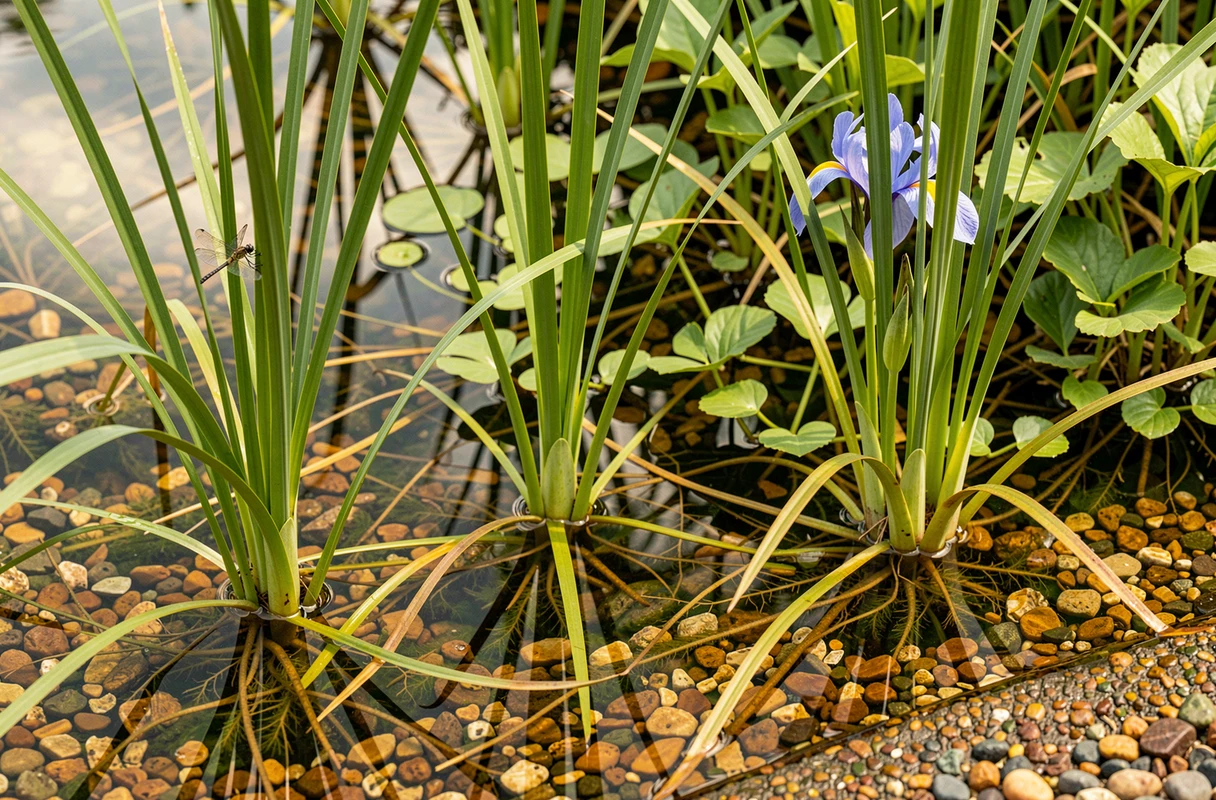
- Aquatic plants: marsh irises, reeds, water lilies – the choice of species depends on the local climate and the depth of the lagooning area. A poor plant choice compromises the ecosystem’s balance
Concrete construction offers maximum durability but increases the budget. Eco-construction solutions (wood, local stone) help reduce the project’s carbon footprint while controlling costs, provided locally available materials can be found.
Seasonal maintenance of an ecological pool: what it really involves
No chlorine to buy, no pH to correct every week. The maintenance of a natural pool follows the rhythm of the seasons. In spring, the plants that have grown are trimmed. In summer, the clarity of the water is monitored, and dead leaves are removed. In autumn, a protective net limits organic debris.
Maintenance requires about an hour per week during the season. This is comparable to the time spent on a traditional pool, but without purchasing products. The main risk is neglecting the regeneration area: untrimmed invasive plants reduce water circulation and degrade filtration.
A well-designed and properly maintained pool reaches its biological balance after two to three seasons. After this point, the aquatic ecosystem largely regulates itself. The frogs, dragonflies, and birds that settle in are not just an aesthetic bonus: they actively participate in mosquito control and the balance of the environment.
The true cost of a natural pool is not reflected in a construction quote. It is measured over time, adding a higher initial investment, almost zero operating costs, and a landscape asset that increases in value over time.