
The vitality of active seniors is not just about walking thirty minutes a day and eating vegetables. It relies on precise physiological mechanisms, activity choices adapted to residual functional capacity, and a proactive home environment. Here, we address the technical levers that most mainstream guides overlook.
Early detection of frailty: the preventive shift in France
Detecting frailty before any loss of autonomy represents a major paradigm shift in the care of seniors. Structured programs like ICOPE, supported by certain pension funds and care networks, now offer prevention assessments coupled with guidance towards local resources (associations, CPTS, health workshops).
The goal is clear: to identify weak signals before the first fall or the first cognitive decline. The assessment focuses on five functional areas (mobility, cognition, nutrition, vision, hearing) and leads to an individualized pathway.
We recommend that seniors seek this type of assessment as soon as they retire, without waiting for an incident. Most complementary pension funds include these services, and one can also explore the benefits of Tendance Équilibre to structure a comprehensive prevention approach. Early detection does not replace traditional medical follow-up, but it fills a blind spot: that of capacities that decline slowly, without apparent symptoms.
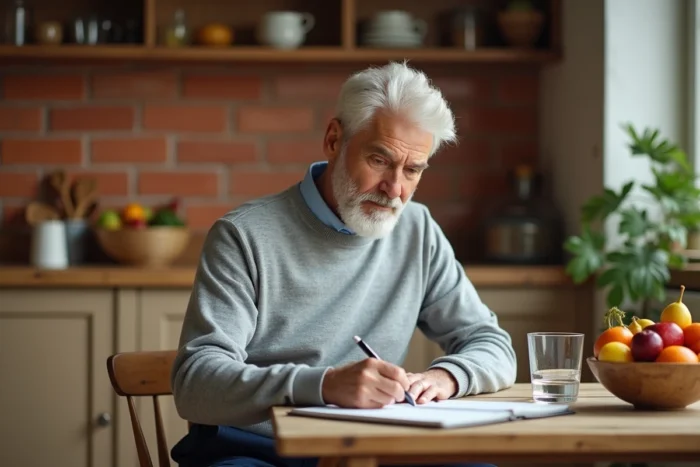
Proactive housing adaptation: ergonomic assessment before a fall
The historical logic in France has been to adapt the home after an accident. This reactive approach is shifting towards a preventive housing assessment by an occupational therapist, before any episode of falling or loss of autonomy.
A trained occupational therapist analyzes daily movements, the height of work surfaces, the lighting in nighttime passage areas, and the bathroom configuration. Recommendations range from replacing a bathtub with a walk-in shower to installing grab bars at heights calibrated to the occupant’s morphology.
What a typical assessment covers
- Analysis of indoor walking routes (hallways, stairs, door thresholds) and identification of areas at risk of tripping
- Verification of ambient light levels, measuring illumination in bedrooms, often underestimated in seniors
- Recommendations on furniture (seat height, chair stability, accessibility of high storage) adapted to grip strength and joint range
This approach remains largely unknown to seniors themselves. Several local initiatives offer it for free or at a reduced rate through local authorities. Anticipating housing adjustments reduces the risk of falling and delays the loss of autonomy in a measurable way.
Adapted physical activity: intensity and frequency according to functional capacity
Walking is often presented as the panacea. It remains a foundation, but is not enough to preserve muscle mass or dynamic balance. We observe that seniors who combine three types of engagement achieve the best functional results.
Three training pillars for active seniors
Light resistance training (elastic bands, body weight, weights of one to three kilograms) slows down sarcopenia. Two weekly sessions are sufficient to maintain lower limb strength, directly correlated to the ability to rise from a chair without support.
Proprioceptive balance training (exercises on one foot, heel-to-toe walking, unstable platforms) improves postural reflexes. This is the most underutilized lever in mainstream programs, while loss of balance precedes falls by several months.
Moderate endurance (cycling, swimming, Nordic walking) maintains cardiorespiratory capacity. Cycling, in particular, spares weight-bearing joints while engaging the quadriceps. Workshops led by sports educators trained in adapted physical activity ensure a dosage consistent with health status.
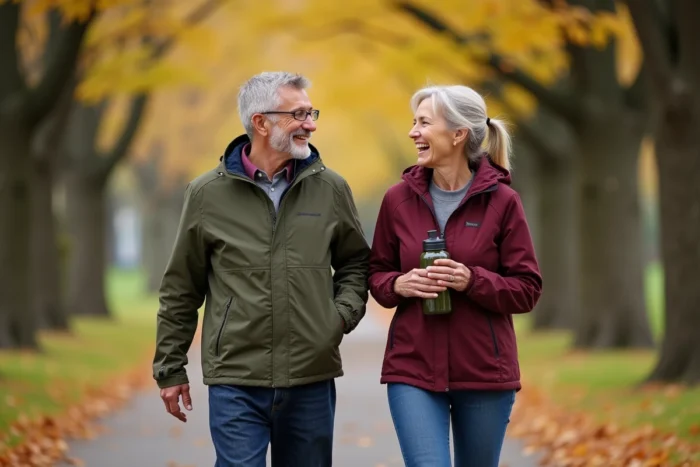
Cognitive stimulation and social connection: two vital linked functions
Social isolation accelerates cognitive decline. This link is documented, and we see it reflected in the structuring of current prevention programs, which systematically combine intellectual activities and group interactions.
Memory workshops in residences or associations go beyond crossword puzzles. The most effective formats alternate problem-solving, learning new skills (digital tablet, foreign language), and thematic discussions. Active learning engages brain plasticity more than simple revision.
The living environment also plays a direct role. A neighborhood with local shops, accessible transport, and green spaces encourages spontaneous outings. Seniors living in city centers or in residences close to these services maintain a higher level of daily interaction than those in suburban areas reliant on cars.
Concrete indicators of good social integration
- At least two collective activities per week (workshops, volunteering, sports clubs), not necessarily related to health
- A network of contacts that can be mobilized in case of practical needs (shopping, medical accompaniment), beyond the family circle
- Participation in local or associative events, even occasionally, which maintains a sense of social usefulness
The well-being of active seniors is built on documented technical choices, not vague formulas. Detection of frailty, housing adaptation, three-component physical activity, cognitive stimulation coupled with social connection: these four axes form an operational framework. Each senior benefits from discussing these topics with a healthcare professional to tailor them to their situation.